Context & Objectives
The National Library of France (BnF) continuously digitizes its documentary heritage via Gallica, its digital library platform. Millions of pages contain illustrations (engravings, maps, scientific diagrams, historical photos…) whose cataloging remains largely manual — a massive and unscalable endeavor.
This 8-month Capstone Project (PFEE), conducted in direct partnership with the BnF, aims to automate this end-to-end workflow:
- Acquire data at scale via Gallica’s IIIF APIs.
- Locate & reorient each illustration automatically within digitized pages.
- Classify illustrations according to BnF’s multi-criteria annotation taxonomy.
- Deploy the optimal combination of deep learning models for production integration at BnF.
The Dataset: BnF Heritage Corpus
The benchmark dataset consists of historical BnF document pages manually annotated in Label Studio by heritage domain experts (Golden Dataset in JSON format). Each region of interest is defined by relative bounding box coordinates and tagged across 4 metadata axes.
Illustrations are annotated according to four classification axes defined by BnF:
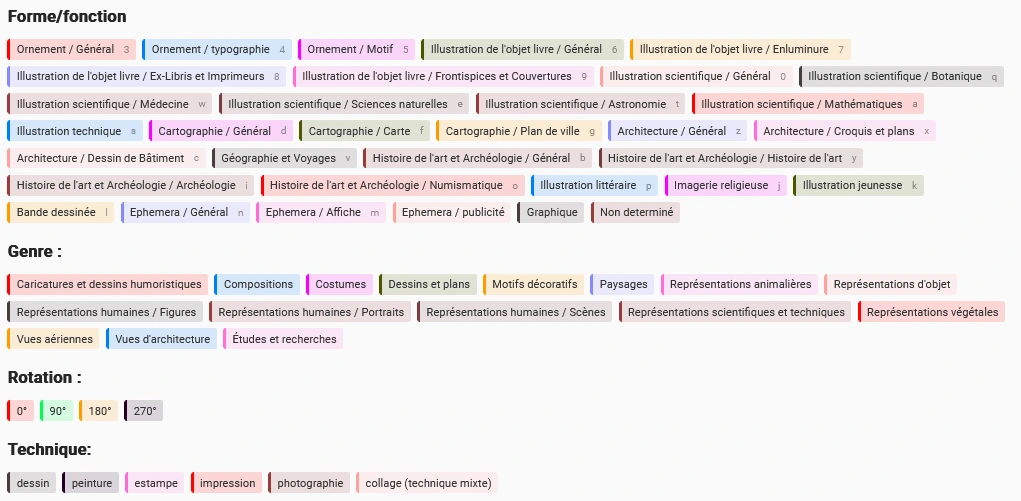
The richness and complexity of this taxonomy (over 40 Form/Function labels alone, 4 rotation classes, 5 printing techniques) make the classification task particularly ambitious.
Technical Pipeline
Step 1 — Large-Scale Data Ingestion
The first challenge is obtaining images from Gallica servers. The ARK and folio identifiers for each document are extracted from the annotated dataset, then used to query the BnF IIIF v3 API (openapi.bnf.fr/iiif/image/v3).
Downloading is multithreaded with Gallica rate-limiting management via exponential backoff (HTTP 429), automatically generating an HTML inspection report to validate the quality of retrieved data.
Step 2 — Dataset Formatting & Preparation
Raw data is converted into two distinct formats depending on the target model:
| Format | Target Model | Structure |
|---|---|---|
| YOLO | YOLO / Ultralytics | Normalized centered coordinates |
| Florence-2 | Microsoft Florence-2 | Tokens <loc_x1><loc_y1><loc_x2><loc_y2> |
The Train/Validation split is performed deterministically (70% / 30%) to ensure benchmark reproducibility.
Segmentation & Orientation Detection: Comparative Benchmark
The first task — locating the illustration and detecting its orientation within the page — is tackled by two competing approaches:
| Approach | Model | Key Features |
|---|---|---|
| Classical Detection | YOLO (Ultralytics, pre-trained yolo26n.pt) |
Fast, proven, fine-tuned on bboxes + rotation |
| Vision-Language (VLM) | Florence-2 (microsoft/Florence-2-base) |
Fine-tuning with vision backbone frozen, SDPA patch |
The comparison metrics selected are:
- IoU (Intersection over Union) — overlap quality between predicted bounding box vs. ground truth
- mAP@50 / mAP@50-95 — overall detection performance
- Orientation Accuracy — accuracy rate across the 4 rotation classes (0°/90°/180°/270°)
Initial Segmentation Results (Florence-2)
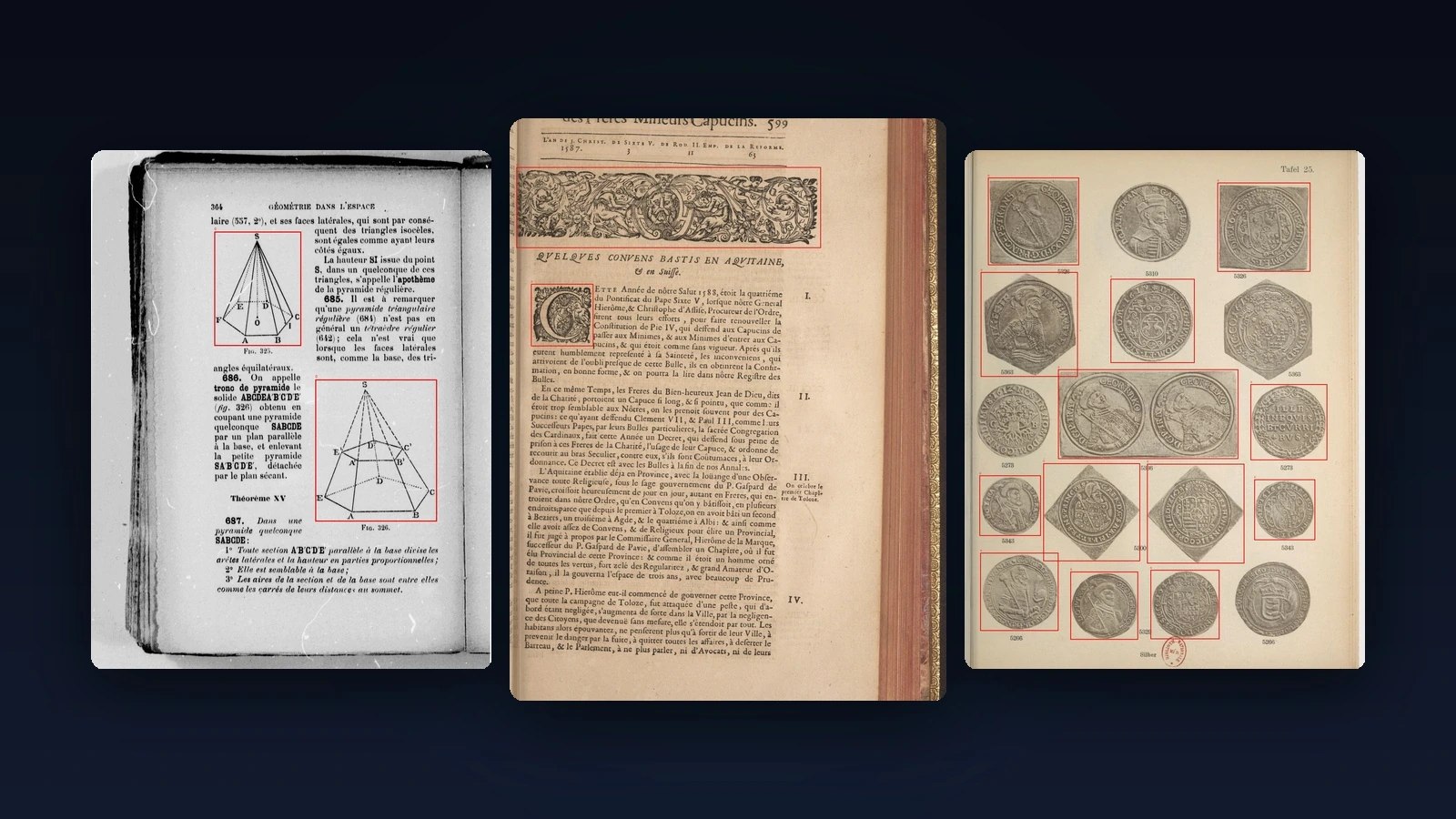
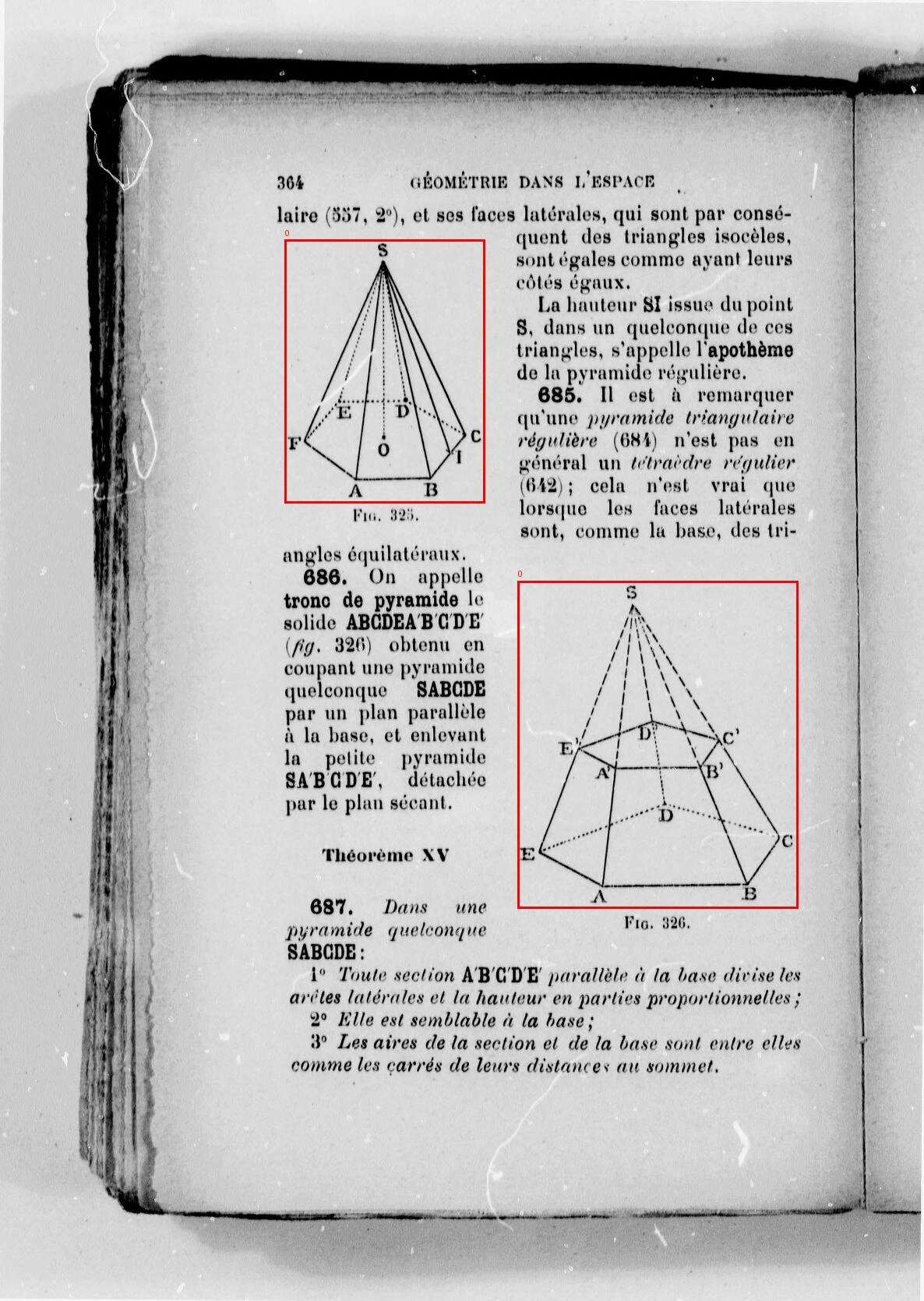
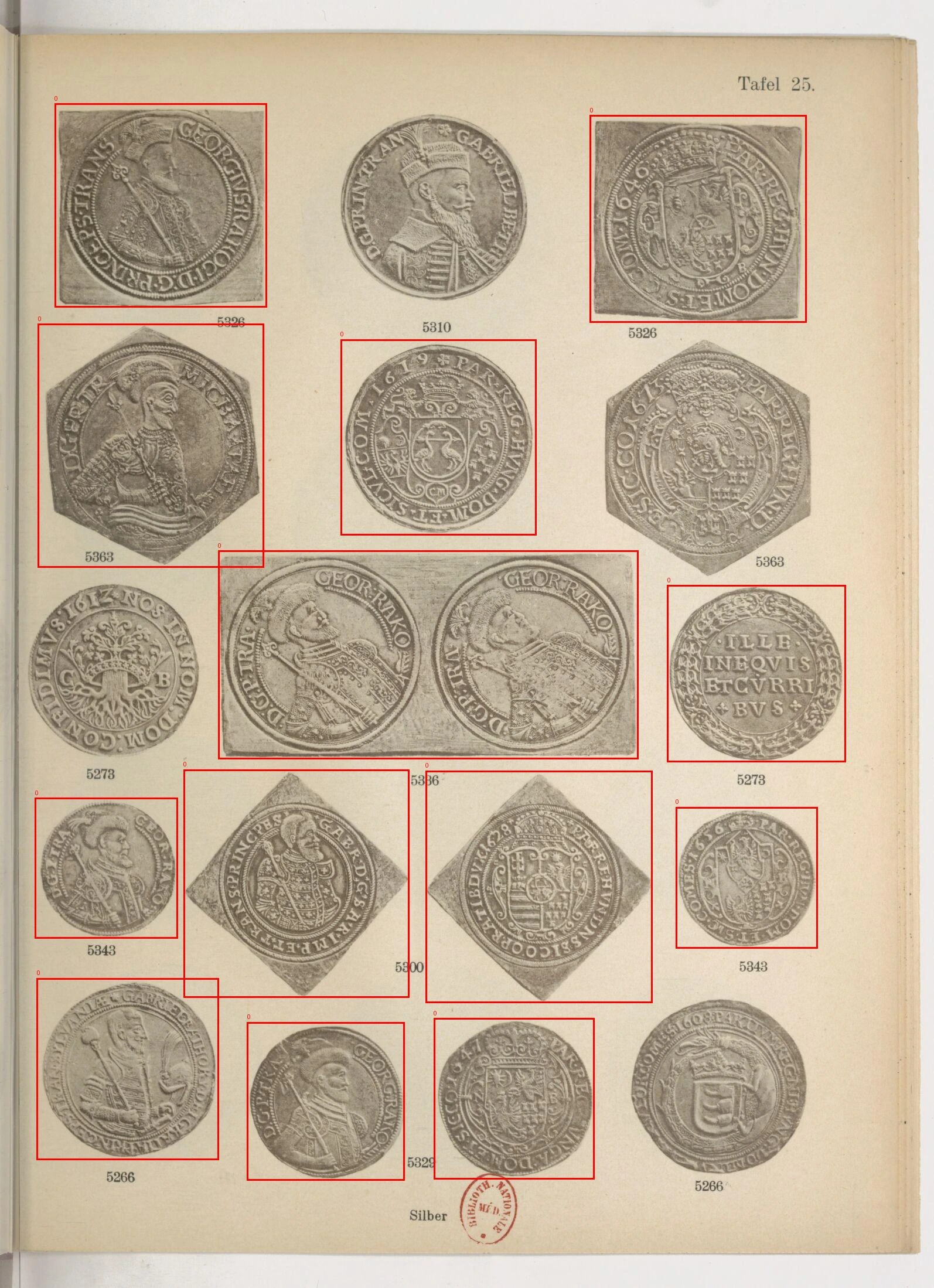
Here are example illustration localization and segmentation results obtained by the Florence-2 Vision-Language model fine-tuned on the BnF dataset:
| Florence-2 — Geometry Treatise | Florence-2 — Illustrated Document | Florence-2 — Historical Treatise |
|---|---|---|
 |
 |
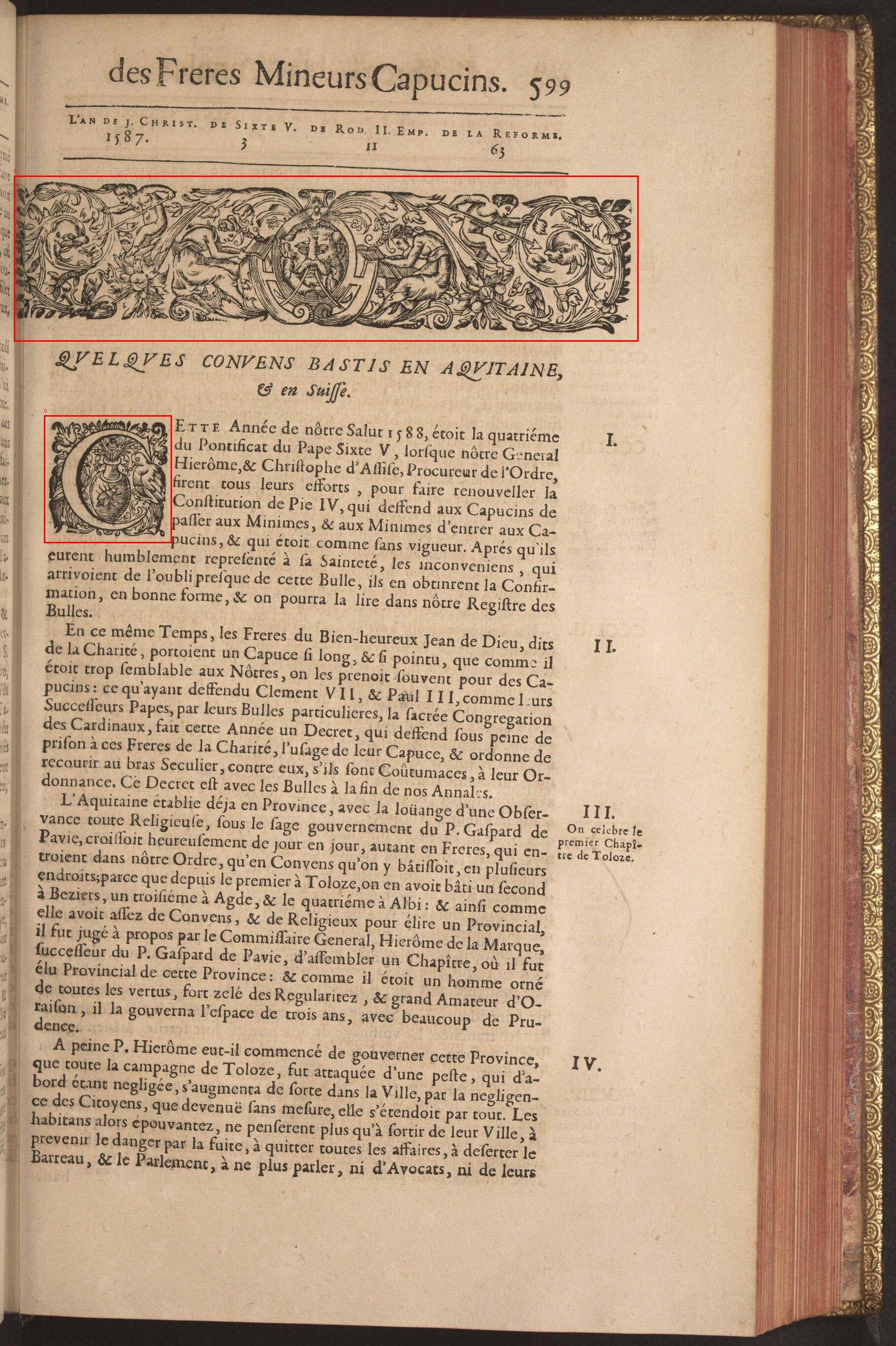 |
Multi-Label Classification: Target Architecture
The second task — classifying illustration content — is currently under exploration. Initial testing is conducted with ConvNeXt, evaluated for its ability to extract visual features across highly diverse graphic styles (engravings, photographs, maps…).
Project Status
The project is currently ongoing — final delivery is scheduled for late January 2027. At this stage, the data ingestion and dataset preparation pipeline is operational, and the detection benchmark phase is underway. Comparative results and final classification will be integrated as project work progresses.